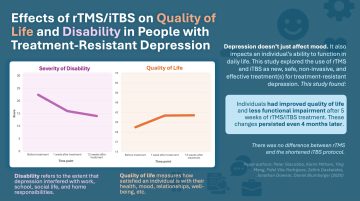
Evaluation of the effects of rTMS on self-reported quality of life and disability in treatment-resistant depression: A THREE-D study
Depression doesn’t just affect mood. It also impacts an individual’s ability to function in daily life. This study explored how the use of rTMS and iTBS as new, safe, non-invasive, and effective treatment(s) for treatment-resistant depression affected individuals’ quality of life and levels of disability.
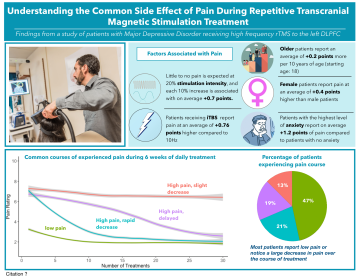
Understanding the Common Side Effect of Pain During Repetitive Transcranial Magnetic Stimulation Treatment
The symptoms of depression are bad enough without enduring side effects from the medications used to treat them. Newer treatments without drugs include repetitive transcranial magnetic stimulation (rTMS), a non-invasive procedure where patients receive a series of short magnetic pulses over the scalp to stimulate the nerve cells of the brain. Daily 40-minute treatments using a protocol called high-frequency stimulation (HF) are delivered for 6 weeks, however this can be shortened to daily 3-minute treatments using a protocol called intermittent theta burst stimulation (iTBS).